
Heritage Curtains for Embassies & Listed Properties
We recreate authentic historic curtain styles and repair sun-damaged linings to give heritage fabrics a new lease of life. Serving London, Sussex, Surrey, and Kent.
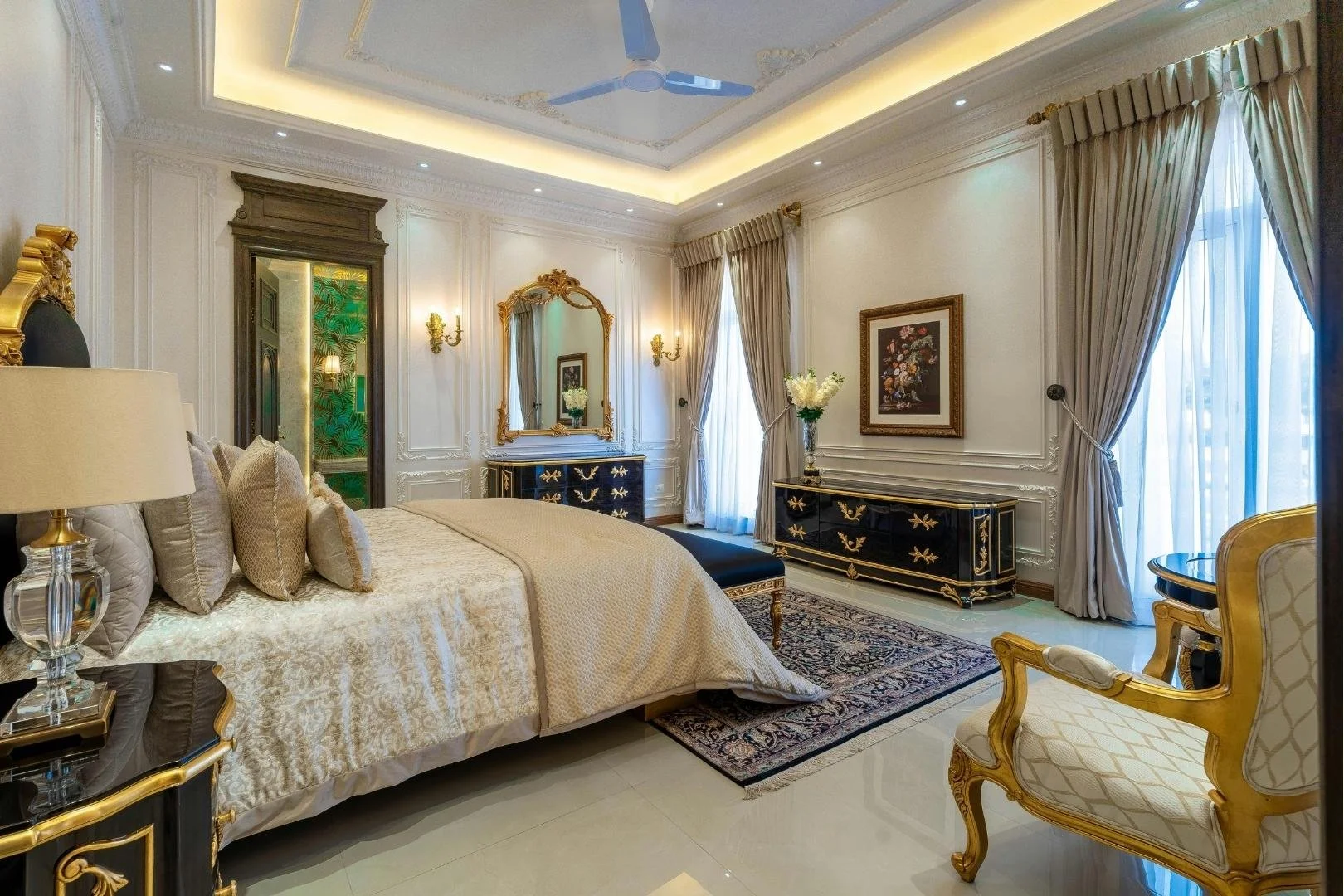
Preserve Without Replacing
We help you retain historic value while upgrading fire safety. Choose Treated (Type B) linings for formal state rooms, or Inherently FR (Type C) for discreet areas needing zero-maintenance compliance.
Provenance & Certification
Every curtain includes a permanent batch label linked to a Certificate of Conformity — supporting conservation records and providing a traceable compliance chain for audits and stewardship.
Batch Projects & Matching
We refurbish suites and public rooms in matched batches. From damasks to bullion trims, we dye-match or source conservation-grade alternatives to preserve visual unity across heritage interiors.
We measure on-site or use archived plans, documenting pleats, trims, and profiles for conservation continuity.
We offer interlined silks, wool serge, and IFR linings — matched to heritage zones and fire safety grades.

Handmade in Brighton. Every curtain receives a woven spec label and Certificate of Conformity.
We offer discreet repairs, reproofing, and archive-based resupply — ensuring future phases stay visually and legally aligned.
Heritage Craftsmanship
Standard factory curtains fail in historic buildings. Our high-end tailoring background ensures a perfect fit for complex glazing and listed properties.
Custom Design
Standard contract curtains are utilitarian and generic. At TailorBox, we approach school refurbishment with the mindset of a High-End Tailoring Studio.
Statement Pieces: We create design features that impress prospective parents. From complex pattern matching to bespoke headers (Goblet or Triple Pinch Pleat) and hand-finished trims, we create curtains that respect the architectural grandeur of your Main House.
The Perfect Hang: Our tailoring roots mean we understand drape and weight. We use superior interlinings and weighted hems to ensure massive stage drapes or tall library curtains hang perfectly, giving a crisp, prestigious finish that mass production misses.
The "Heritage-Match" Service
You don't have to compromise history for fire safety.
Inspiration: Show us the original 19th-century drapes or the school colours you need to match.
Sourcing: We access the whole fabric market to find a BS 5867 compliant match. We work with specialist mills to find modern FR velvets and damasks that mimic the texture and weight of traditional textiles.
Result: You restore the visual history of the room while satisfying the modern Fire Officer.

Hardware Upgrades & Motorization
We can install advanced track systems that blend seamlessly with period architecture, protecting your fabrics without compromising the historic aesthetic.
The Conservation Case for Motorization
In Heritage properties, the primary cause of fabric degradation is manual handling. Pulling heavy drapes transfers oils to the leading edge and stresses fragile headers.
We install motorisation not as a gadget, but as a preservation tool. By automating operation, we eliminate physical contact, extending the life of your textiles by years.
Contact us to discuss your options.

Heritage Compliance & Standards
We resolve the conflict between the Planning (Listed Buildings) Act 1990 and the Regulatory Reform (Fire Safety) Order 2005.
The "Non-Domestic" Reality
The Law: Despite their residential appearance, Embassies and Stately Homes open to the public are legally classified as Non-Domestic Workplaces.
The Liability: Under the Regulatory Reform (Fire Safety) Order 2005, the "Responsible Person" must ensure all soft furnishings meet contract standards. Domestic furniture regulations are insufficient and can void commercial insurance policies.
Solution: We manufacture strictly to BS 5867 Part 2, ensuring your estate is legally compliant without compromising its historic character.
Conservation-Friendly Fire Safety
The Conflict: Historic England restricts structural changes (sprinklers/doors) in Grade I & II* properties.
Solution: Soft furnishings are your primary fire mitigation tool. By installing BS 5867 Type B or C curtains, you significantly reduce the fire load and flame spread velocity of a room. This allows you to improve safety ratings without altering the building's historic fabric or requiring Listed Building Consent for structural works.
Diplomatic & High-Security Standards
The Standard: BS 5867 Part 2 Type C.
The Requirement: For high-risk zones such as Embassy staff quarters or sleeping accommodation within secure estates.
Our Spec: We specify Inherently Fire Retardant (IFR) fabrics that meet the rigorous "Type C" standard (self-extinguishing within 2.5 seconds). We source "Technical Heritage" textiles—modern IFR damasks and velvets—that satisfy the Fire Officer while respecting the dignity of the venue.
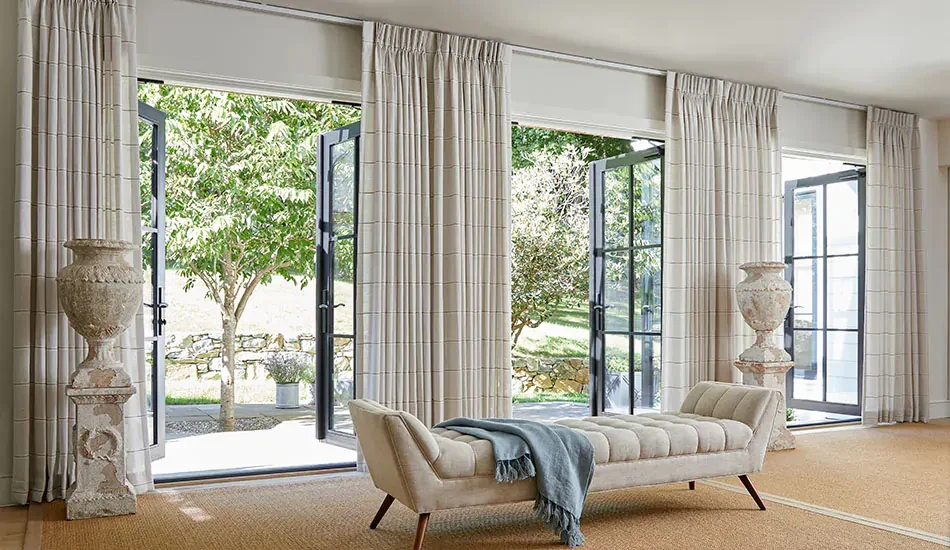
Optimising Curtain Dimensions
Luxury curtains achieve a premium look through a combination of architectural scale and material density. By manipulating height, width, and depth, they transform a standard window into a focal point that feels intentional rather than utilitarian.
1. Height: The Illusion of Scale
In high-end settings, curtains are typically ceiling-mounted or installed as close to the ceiling as possible.
The Look: By eliminating the visual gap between the top of the window and the ceiling, the curtains draw the eye upward, making the room feel significantly taller than its actual dimensions.
The Finish: Floor-to-ceiling coverage stop between 0 and 1 cm above the floor for a "clean" architectural finish or use "pooling" (adding 5 cm or more) to create a soft, opulent look that hides uneven floors.
2. Width: Volume and Frame Enlargement
Luxury curtains use a high "fullness ratio," meaning the amount of fabric used is 2.5 to 3.0 times the width of the track.
The Look: This ensures the curtains have deep, consistent gathers even when fully closed, rather than appearing as a flat, stretched sheet.
The Illusion: By extending the track significantly past the window frame (stack-back), the curtains "park" entirely on the wall when open. This makes the window appear much wider and ensures 100% of the glass is clear to maximize natural light.
3. Depth: Preventing "Crushing"
Premium installations account for "projection depth"—the space between the wall and the fabric.
The Technical Detail: For modern Wave headings, a minimum fitting depth of 160 mm (16 cm) is required so the "S" folds can hang freely without touching the glass or wall.
The Result: Properly projected curtains have a three-dimensional, sculptural quality. When the depth is too shallow, the folds crush against the window, ruining the uniform rhythm of the fabric and making the installation look amateur.
Bottom Line
Luxury curtains look superior because they behave as part of the architecture. The combination of floor-to-ceiling height and generous width provides superior acoustic dampening by acting as a giant fabric "baffle" that softens echoes. The density of the fabric (especially when interlined) provides a visual "weight" that signals quality, while the seamless integration from wall-to-wall or floor-to-ceiling hides the "messy" hardware and corners of the window frame.
We’d love to help. Get in touch to begin:
📧 tailorbox@brightonalterations.com
📞 07955 751896